
Walking 10,000 Steps a Day: Real Benefits After 30 Days
Discover the real benefits of walking 10,000 steps a day for 30 days. Learn how daily walking improves weight loss, mental health, heart health, energy, sleep, and overall fitness naturally.
HEALTH AND WELLNESS
5/7/20263 min read
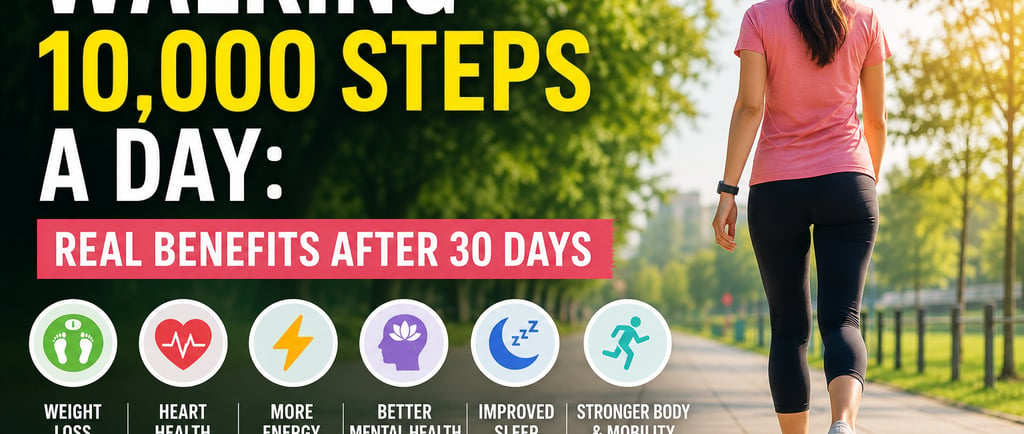
Walking is one of the simplest and most effective ways to improve your health naturally. In recent years, the “10,000 steps a day” challenge has become a popular fitness goal for people who want to lose weight, increase energy, and improve overall wellness without intense workouts.
But what actually happens when you walk 10,000 steps every day for 30 days?
In this article, we’ll explore the real benefits of walking 10,000 steps a day, including physical, mental, and emotional changes you may notice after one month.
What Does 10,000 Steps Mean?
Walking 10,000 steps equals approximately:
7–8 kilometers
4–5 miles
Around 1.5 to 2 hours of walking daily
The exact distance depends on your stride length and walking speed.
Many people use fitness trackers or mobile apps to count their daily steps and stay motivated.
1. Weight Loss and Fat Burning
One of the biggest reasons people start a daily walking routine is for weight loss.
Walking 10,000 steps burns approximately:
300–500 calories per day
Depending on body weight, pace, and terrain
After 30 days, this calorie burn can contribute to:
Reduced belly fat
Improved metabolism
Leaner body composition
Better muscle tone in legs and hips
If combined with healthy eating, walking daily can help create a sustainable calorie deficit.
2. Improved Heart Health
Daily walking is excellent for your cardiovascular system.
Research shows that regular walking can help:
Lower blood pressure
Improve blood circulation
Reduce bad cholesterol
Strengthen the heart
Reduce risk of heart disease
Walking 10,000 steps a day also improves endurance and stamina over time.
Even moderate-paced walking can significantly improve long-term heart function.
3. Increased Energy Levels
Many people notice higher energy levels after just one week of consistent walking.
Why?
Because walking improves:
Blood flow
Oxygen circulation
Muscle activation
Mental alertness
Instead of making you tired, regular walking often helps you feel more active throughout the day.
After 30 days, climbing stairs and daily activities may feel much easier.
4. Better Mental Health and Reduced Stress
Walking is not just physical exercise — it is also powerful for mental wellness.
Walking daily can help reduce:
Stress
Anxiety
Overthinking
Mental fatigue
It also boosts feel-good hormones like serotonin and endorphins.
Many people report feeling calmer, happier, and emotionally balanced after developing a walking habit.
Walking outdoors in nature may provide even greater mental health benefits.
5. Improved Sleep Quality
If you struggle with poor sleep, daily walking may help.
Walking helps regulate your body’s natural rhythm and reduces stress hormones that interfere with sleep.
After walking consistently for 30 days, many people experience:
Falling asleep faster
Deeper sleep
Better morning freshness
Reduced insomnia symptoms
Morning sunlight exposure during walks can also improve sleep cycles naturally.
6. Stronger Legs and Better Mobility
Walking activates multiple muscle groups, including:
Calves
Thighs
Glutes
Core muscles
Over time, walking helps improve:
Balance
Posture
Joint flexibility
Muscle endurance
This is especially beneficial for people with sedentary office jobs.
Regular walking also supports healthy aging and joint health.
7. Better Blood Sugar Control
Walking after meals can help regulate blood sugar levels.
Studies suggest that daily walking improves insulin sensitivity and helps the body use glucose more efficiently.
This makes walking especially useful for people managing:
Prediabetes
Type 2 diabetes
Insulin resistance
Even a 10–15 minute walk after eating can be beneficial.
8. Enhanced Mood and Confidence
Completing 10,000 steps every day creates a sense of achievement and discipline.
After 30 days, many people notice:
Increased confidence
Improved mood
Better self-esteem
Stronger motivation
Small daily habits often create powerful long-term transformations.
Consistency matters more than perfection.
Tips to Reach 10,000 Steps Daily
If reaching 10,000 steps feels difficult, try these simple strategies:
Take Short Walks Throughout the Day
Walk after meals
Use stairs instead of elevators
Walk while talking on phone calls
Morning or Evening Walks
Creating a fixed routine makes it easier to stay consistent.
Use a Fitness Tracker
Tracking progress increases motivation and accountability.
Walk with Music or Podcasts
Entertainment can make long walks more enjoyable.
Is Walking 10,000 Steps Necessary?
While 10,000 steps is a great target, research suggests that even:
6,000–8,000 steps daily
can provide significant health benefits.
The key is consistency and reducing sedentary behavior.
If you are a beginner, start slowly and increase your daily step count gradually.
Walking 10,000 steps a day for 30 days can create noticeable improvements in both physical and mental health.
From weight loss and heart health to better sleep and reduced stress, walking is one of the most accessible forms of exercise for people of all ages.
The best part?
You don’t need a gym membership or expensive equipment — just consistency and comfortable shoes.
Start with one walk today, and your future self will thank you.
FAQs
Does walking 10,000 steps a day help lose weight?
Yes, walking daily helps burn calories, improve metabolism, and support fat loss when combined with healthy eating.
How long does it take to walk 10,000 steps?
It usually takes around 1.5 to 2 hours depending on pace and stride length.
Can beginners walk 10,000 steps daily?
Yes, but beginners should gradually increase their step count to avoid soreness or fatigue.
Is walking better than running?
Walking is lower impact and easier on joints, making it sustainable for many people long term.
What happens after 30 days of walking?
Many people experience increased energy, better mood, improved fitness, weight changes, and better sleep quality.
The Prime Chronicle © 2024
Stay Inspired
Get fresh wellness tips straight to your inbox
We care about your data in our privacy policy.